About Polyolefin Succinic Anhydride
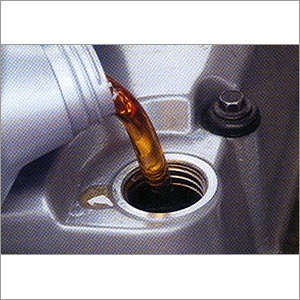
Owing to our two decades expertise in this field, we are engaged in manufacturing and exporting Polyolefin Succinic Anhydride. It is formulated as per the defined industry norms by Orthodox Union, New York under the supervision of learned professionals. Offered chemical is used for carbon dispersion in lubricating oils. In order to ensure the quality of this Polyolefin Succinic Anhydride, our quality control experts test this chemical on different strict parameters.
Features:
-
pH accuracy
-
Enhanced shelf life
-
Highly effective
-
Purity
Specifications:
-
Appearance: Highly Viscous Liquid
-
Color: Dark Amber
-
Specific gravity at 30oC: 0.93 + 0.02
-
Flash Point oC: > 200
-
Viscosity at 100oC, cps: 550 - 750
-
Solubility: Insoluble in water, Soluble in Chloroform, Carbon Tetra Chloride, partially in Toluene and Mineral Oils
-
Chemical Composition: Polyisobutylene Succinic Anhydride
-
CAS Number: 67762-77-0 / 67762-79-2
Superior Performance in Resin ModificationPolyolefin Succinic Anhydride is widely utilized to enhance the compatibility and performance of resins. Acting as a coupling agent, it helps bind different materials together, improving the mechanical and thermal properties of composites. Its high purity and solid powder form ensure effectiveness and easy handling in technical processes, making it an industry favorite for modifying resin structures and formulations.
Versatile Applications in Surface TreatmentThis compound excels in surface treatment applications due to its ability to bond with various substrates. Used as a dispersant, Polyolefin Succinic Anhydride imparts improved adhesion and surface characteristics to treated materials. Its solubility in organic solvents further extends its utility across coating, plastic, and metal strengthening industries, facilitating durable and effective surface modification solutions.
FAQs of Polyolefin Succinic Anhydride:
Q: How is Polyolefin Succinic Anhydride typically used in industrial processes?
A: Polyolefin Succinic Anhydride is commonly employed as a dispersant and coupling agent. It is integrated into resin formulations, surface treatments, and as an additive in lubricants, facilitating improved compatibility and dispersion of components within various chemical and manufacturing processes.
Q: What are the key benefits of using Polyolefin Succinic Anhydride?
A: Its primary benefits include enhanced mechanical properties in polymers, improved surface adhesion, and increased dispersion of additives within formulations. The compounds high purity and adaptability make it valuable for technical applications demanding reliable performance.
Q: Where can Polyolefin Succinic Anhydride be applied effectively?
A: This product is suitable for use in industries such as plastics, coatings, adhesives, and lubricants. It is particularly beneficial in situations requiring surface modification, resin compatibility, or effective dispersion of fillers and pigments.
Q: When should Polyolefin Succinic Anhydride be added during the manufacturing process?
A: It is typically introduced during the blending or compounding stageafter the primary resin or base material is prepared but before final additives are incorporatedto allow thorough interaction and optimal dispersion within the formulation.
Q: What is the process for incorporating Polyolefin Succinic Anhydride into formulations?
A: The compound is dissolved in appropriate organic solvents or directly blended as a powder with other ingredients under controlled conditions, ensuring homogeneous distribution within the mixture. It is then processed according to the specific requirements of the end-use application.
Q: How does its solubility affect its usage in formulations?
A: Polyolefin Succinic Anhydrides insolubility in water and solubility in organic solvents means it should be used where non-aqueous systems are involved, allowing it to dissolve and react effectively without precipitation or loss of uniformity.
Q: What precautions should be considered when handling this chemical?
A: Due to its technical-grade purity and solid powder form, normal safety measures such as protective gloves, eyewear, and dust control should be in place to avoid inhalation or direct contact, despite its lack of odor or taste.








 Send Inquiry


 Send Inquiry